How to Optimize the Warehouse Layout for Speed, Flexibility and Scale
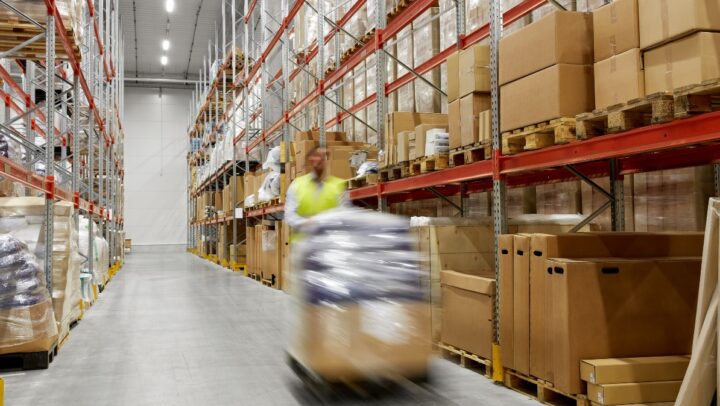
Warehouse Layout Optimization in 2026
6 Tips for Driving Faster Fulfilment
Warehouse layout used to be something wholesalers, e-commerce brands, retailers and 3PLs revisited every few years, maybe after a big expansion, a new customer win or a challenging peak season.
In 2026, that mindset is changing. Fulfilment has become too fast, too complex and too unforgiving for static warehouse designs. Layout is therefore becoming the next operational performance engine. The most cutting-edge warehouses today are prioritizing technologies that enable layout optimization and deliver real business benefits.
Our experts have collated 67 top tips for warehouses looking to drive faster fulfillment in the coming year.
Tip 1: Build Layouts Around Velocity, Not Storage
One of the clearest shifts is that warehouses are no longer designing for where inventory “fits” - but for how quickly it moves.
High-performing operations are reorganizing around SKU velocity and placing fast-moving products closer to packing and dispatch zones, while slower movers are pushed deeper into storage. This ensures fewer steps, shorter pick paths and dramatically faster cycle times.
In 2026, the smartest warehouses will move away from simply storing inventory and towards staging it strategically for fulfilment flow.
Tip 2: Make Slotting and Zone Design Dynamic, Not Fixed
Traditional slotting was often a single annual project: analyze order history, rearrange racking and hope it holds up for the next year.
Now? Demand patterns change too quickly for that.
Warehouses are increasingly adopting systems that continuously re-slot inventory based on real-time customer order behaviour. Zone layouts are being adjusted as product mixes shift, promotions spike or consumer trends evolve.
In 2026, layout shouldn’t be something you “set.” It’s something to optimize constantly.
Tip 3: Put a Modern WMS at the Center of Layout Optimization
Perhaps the biggest change to warehousing in recent times is that, thanks to digital transformation, layout decisions are no longer driven by intuition or spreadsheets.
A cutting-edge Warehouse Management System sits at the center of this optimization, using live operational data to orchestrate movement across the warehouse: from receiving and putaway through to picking, packing and shipping.
A next-generation WMS is increasingly what turns layout from a physical constraint into a flexible advantage, guiding pick paths, reducing congestion, balancing labour across zones and ensuring inventory is positioned where it delivers maximum speed.
In other words: layout is interdependent on your WMS, so choose wisely.
Tip 4: Design Warehouse Flow With Automation in Mind
Robotics adoption continues to accelerate rapidly, but the warehouses seeing the biggest gains are the ones designing layouts specifically for automation, not simply squeezing robots into legacy workflows.
In practice, this means:
- Clearer travel lanes
- Robot-friendly pick stations
- Dedicated replenishment flows
- And layouts that reduce human-machine interference
In the coming years, automation will shape how warehouses are physically structured from the ground up.
Tip 5: Prioritize Throughput and Movement Over Maximum Storage Density
For years, a key metric for warehouse leaders was maximizing storage density. Now the priority is shifting to maximizing throughput.
Leading operations are shifting toward flow-centric layouts that reduce bottlenecks and keep inventory moving smoothly through the fulfilment process. This includes smarter aisle design, clearer separation between inbound and outbound activity and layouts that minimize cross-traffic between pickers, forklifts and robots.
In 2026, the fastest warehouses will be the ones that eliminate friction.
Tip 6: Treat Layout Optimization as a Continuous Competitive Discipline
The overarching theme across all these trends is simple: Warehouse layout isn’t a one-time decision. It’s a living system.
The most advanced businesses are building warehouses that evolve continuously — guided by real-time demand signals, automation readiness and intelligent WMS-driven orchestration.
In a world where fulfillment speed is a differentiator, layout optimization is becoming one of the highest-ROI operational strategies available.
Final Takeaway for Warehouse Layout Optimization
Warehouse layout optimization in 2026 means designing fulfillment environments that move faster, adapt quicker and scale smarter. We’ve seen that a next-generation WMS such as nyce.logic can act as the control layer that connects inventory, labour, automation and customer demand into one continuously improving system.
Ready to optimize your warehouse layout for faster fulfilment in 2026?
See how nyce.logic WMS helps warehouses unlock smarter slotting, smoother workflows and continuously optimized fulfillment performance.